Will Fuller
Vibey
Scroll down
UX Design
UI Design
Mac App
Claude Code (Swift)
Figma MCP Server
I built Vibey to move faster on my AI coding projects. Claude Code massively expanded what I can build as a designer, but working entirely in a terminal never felt natural. Editing long prompts is painful. There's no spellcheck. No proper dictation. Planning and prompting felt harder than it needed to be.
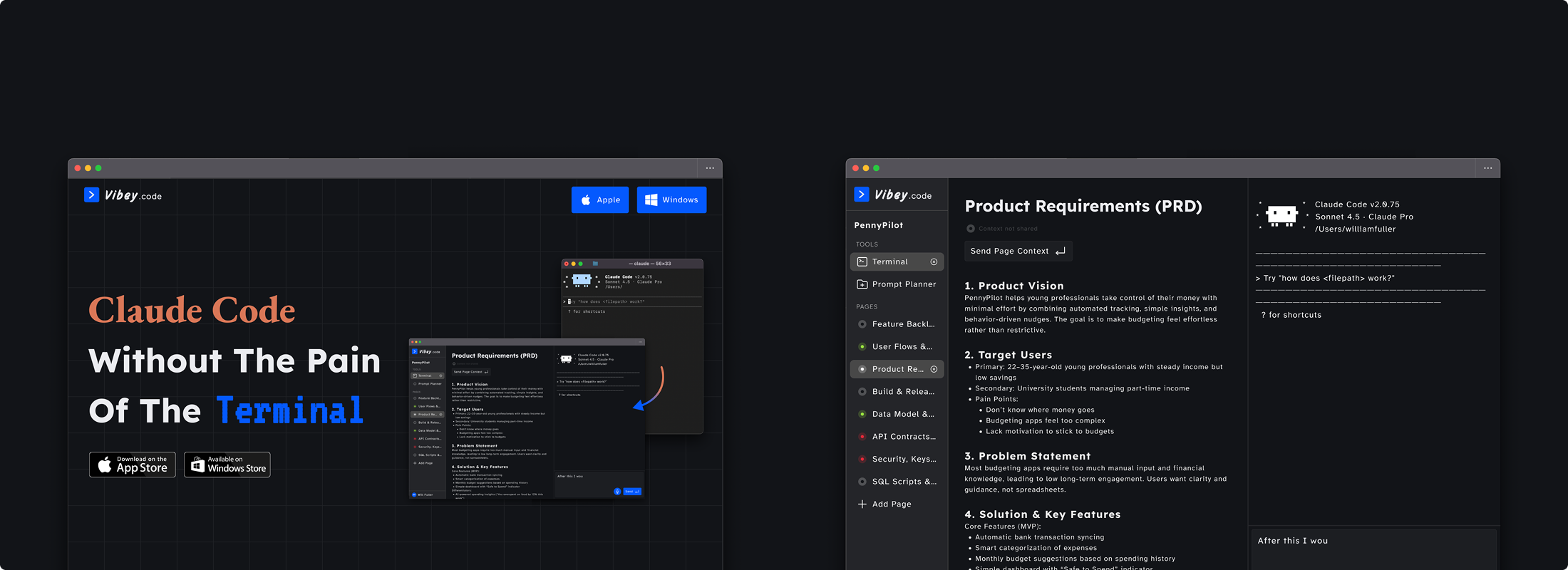
Vibey brings everything I need into one place: plans, PRDs, notes, feature backlogs, and draft prompts ready to send to Claude Code with a single click.
Before Vibey, my workflow was scattered across Coda, Google Docs, markdown files, and Figma links. I was constantly copying, pasting, and jumping between windows just to keep momentum. The terminal became a bottleneck rather than a tool.
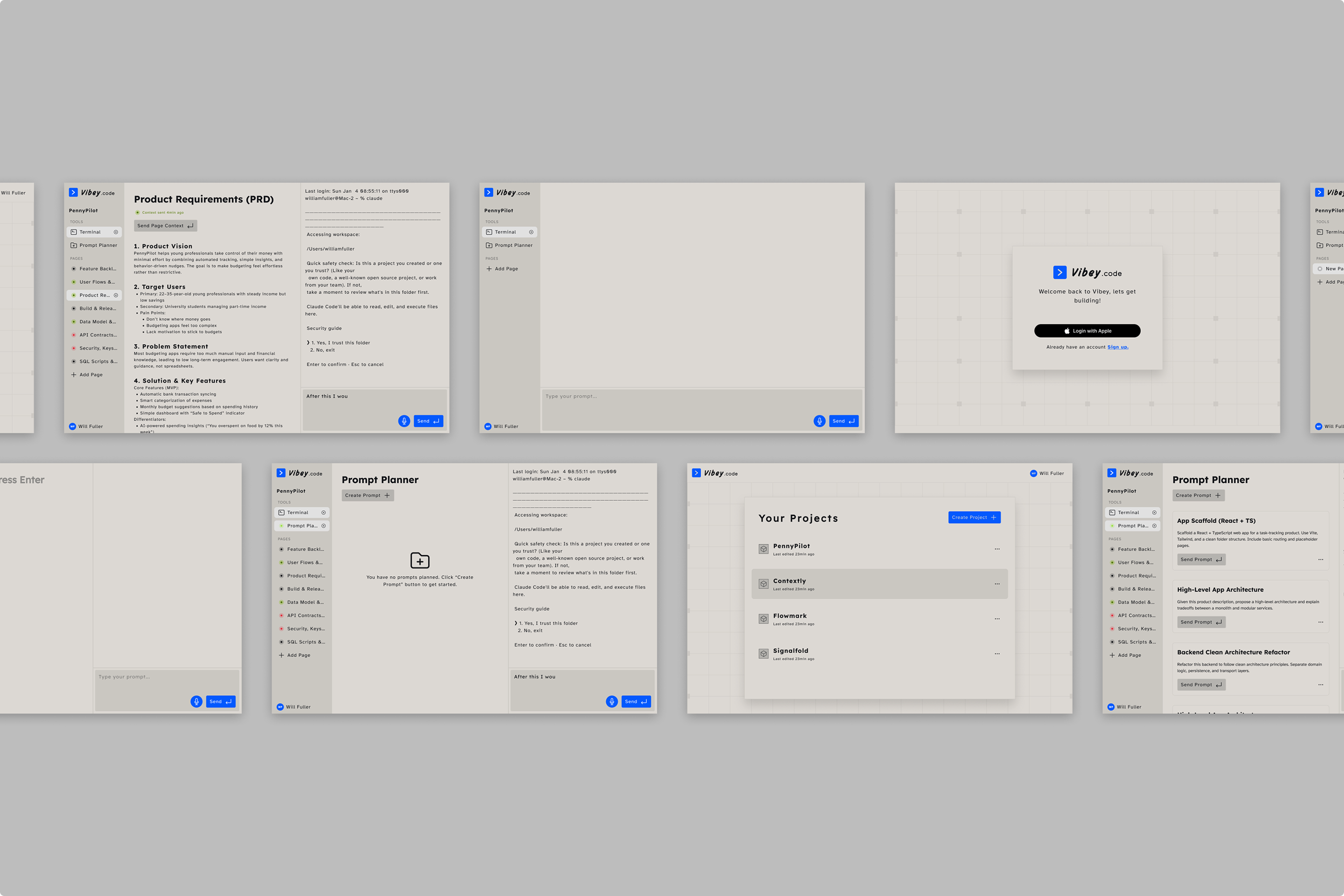
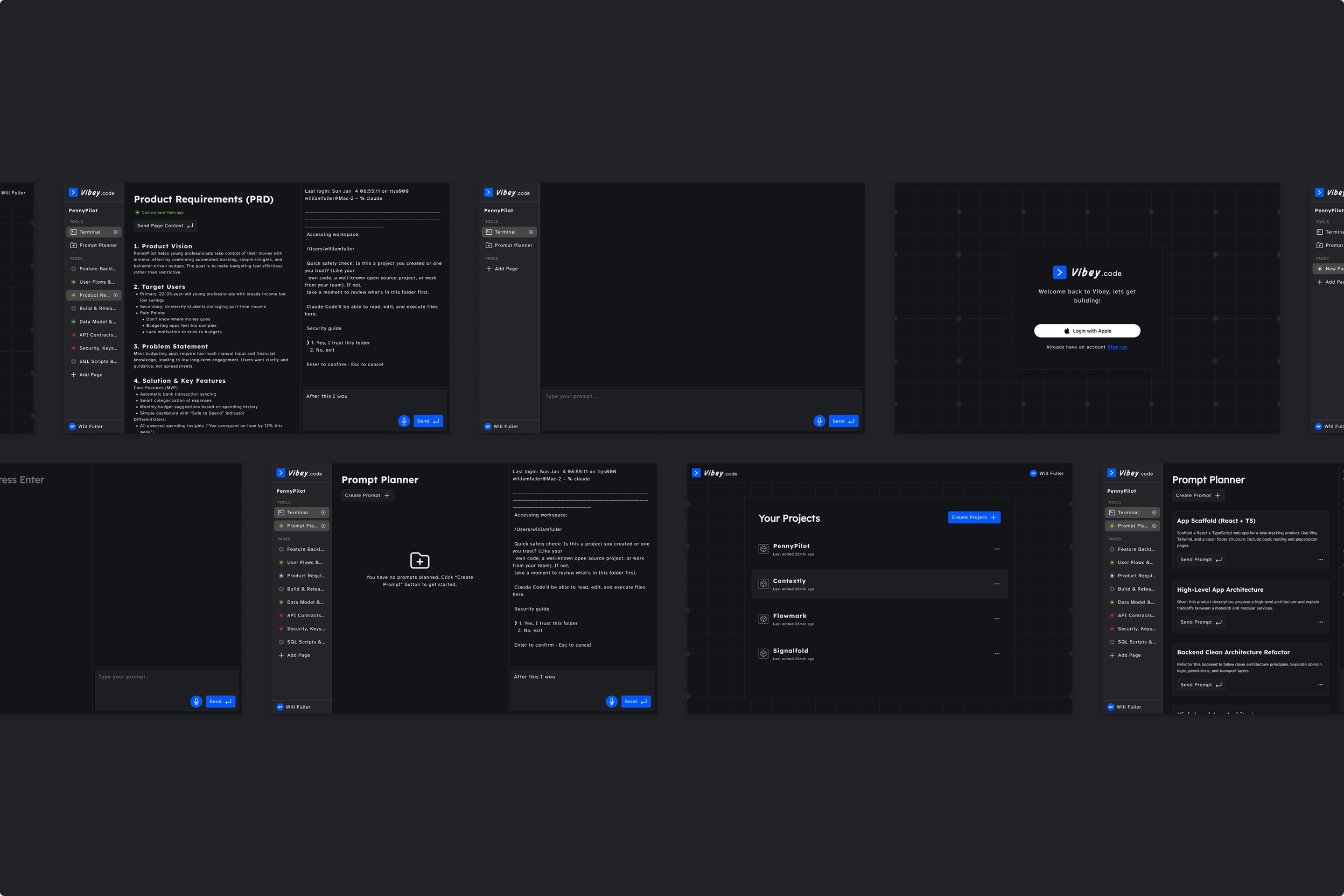
I wanted a simple project that would speed up my side projects, be quick to build, and give me a foundation I could improve over time.
While I like the interface of tools such as Cursor which feel far more intuitive than using Claude Code directly in the terminal I wanted to continue using Claude Code itself. It offers significantly more usage tokens, and the results have consistently been strong for my workflow.
What I needed was a lightweight, affordable layer on top of Claude Code that solved the friction without replacing it.
Pain points I wanted to solve (purple posit notes):
- Editing text in the terminal is frustrating
- No built in spellcheck
- No built in speech to text
- Planning, notes, and PRDs scattered across multiple tools
- Stark black and white terminal contrast causes eye strain
- Poor typography for extended writing and reading
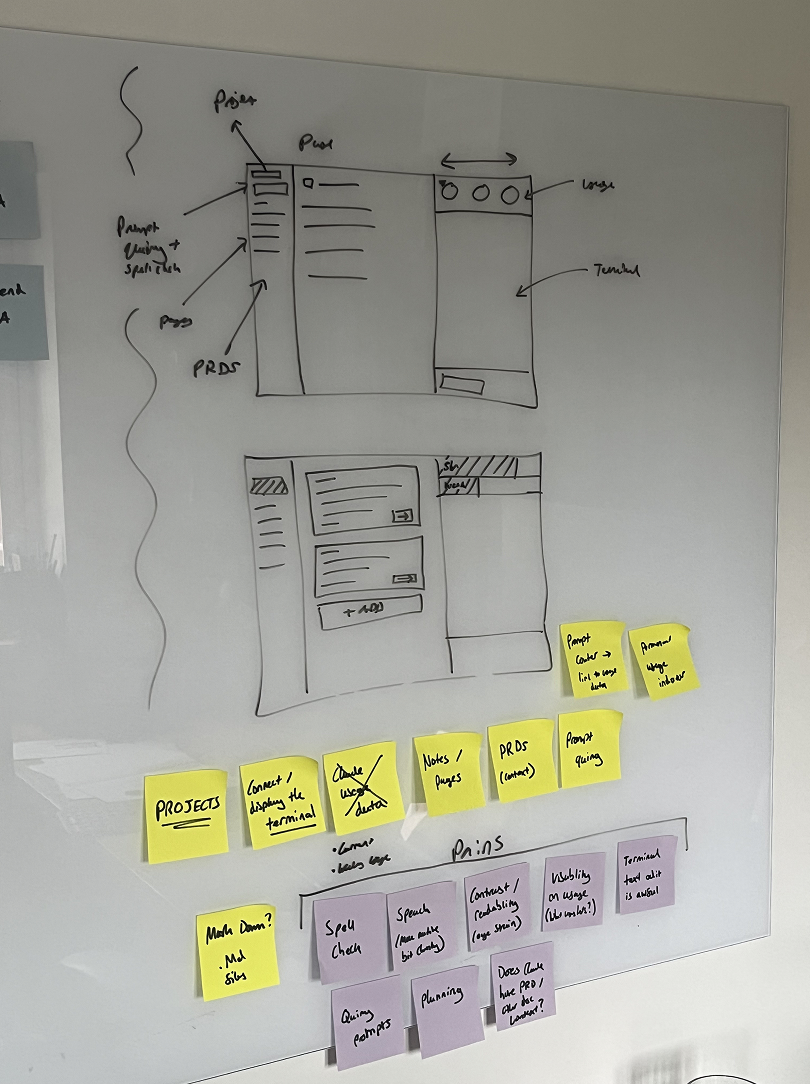
I mapped out all the features I wanted, then deliberately cut the scope down to the most basic version. Anything that didn't make the cut was captured as a future feature rather than discarded.
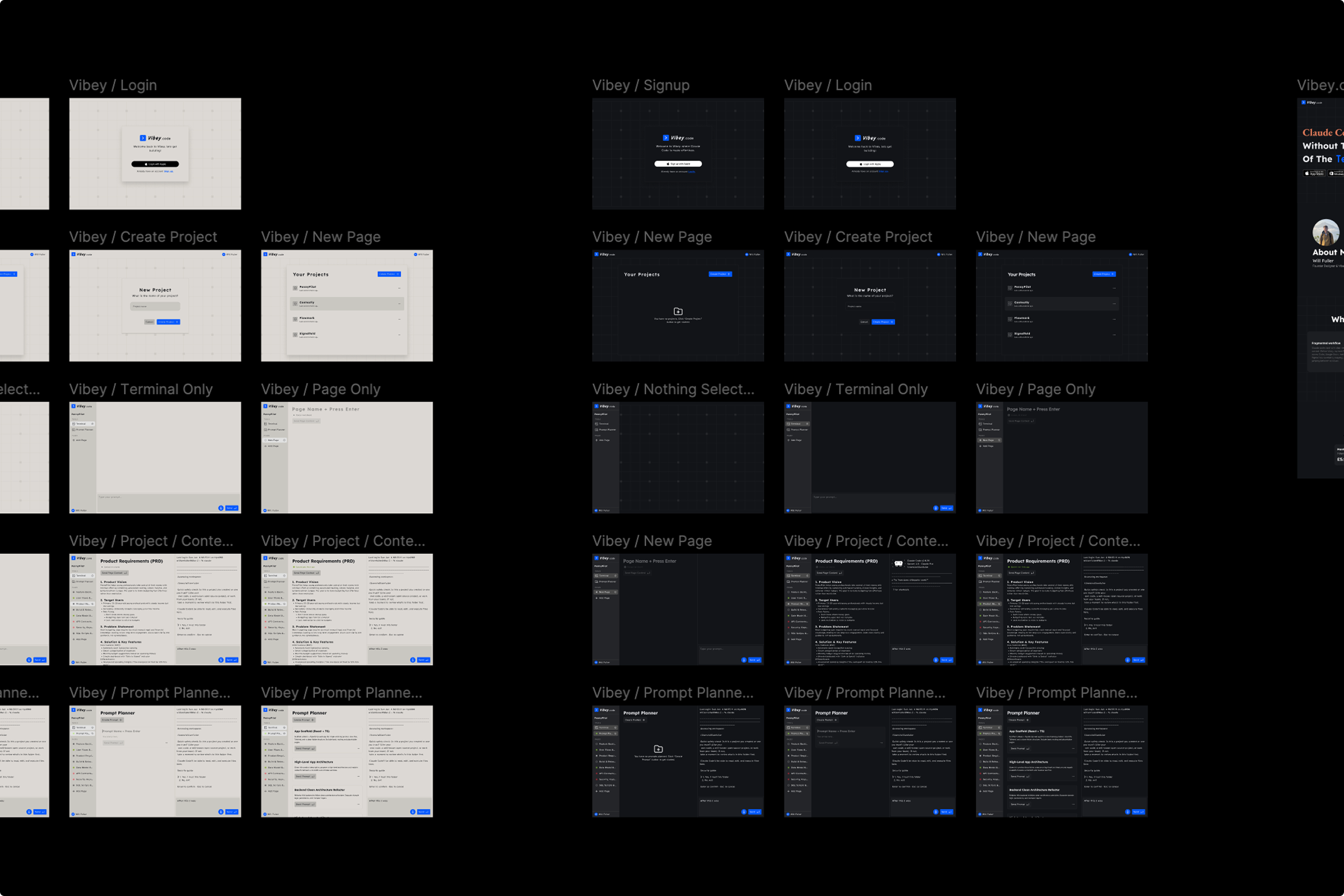
I sketched the main screen around a single idea: everything in one place, with as little friction as possible. From there, I designed the full experience in Figma—including onboarding and support for multiple projects. Once the designs were complete, they were ready to be passed directly into Claude Code for implementation.